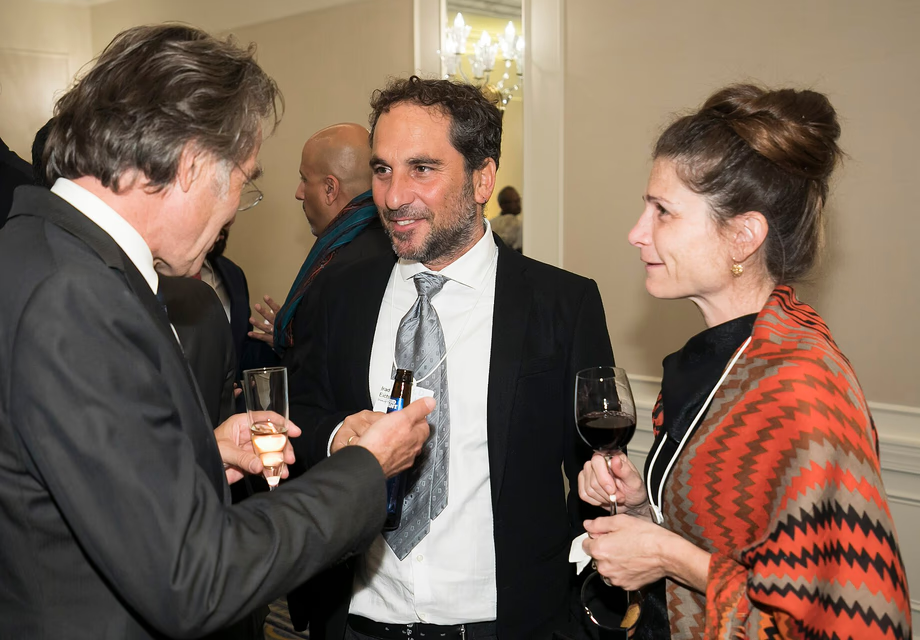
Lloyd Wakefield has spent years documenting Harry Styles on tour, and his account of the work is unusually plain. "I did the behind-the-scenes photos for 'Late Night Talking' and then 'As It Was,'" he told Vogue, and the sentence describes a job that is stranger than it sounds.
Tour photography is not a matter of being a guest with a camera pass. The photographer is embedded with the organisation: present for the hours of rehearsal, the exhaustion after a show, the conversations between people who will spend two years in each other's company. The access is extraordinary, and it is conditional on being invisible enough that the moments remain real.
The Embedded Photographer
The discipline differs from event photography in one decisive respect. An event photographer arrives, works, and leaves. A tour photographer lives with the subject of the photographs, for months, on a bus or a plane, in the same hotels, present at the bad moments as well as the good ones.
That produces a set of conditions no other photographic job replicates.
The unglamorous hours outweigh the glamorous ones. Load-in, soundcheck, waiting, travel, a corridor at two in the morning. Those are the hours that constitute most of a tour, and they are where the interesting photographs are.
There is no schedule that respects photography. The moment happens when it happens, which means carrying a camera continuously and being willing to abandon whatever you were doing.
The subject stops noticing you. This is the benefit of embedding, and it is also the reason discretion matters so much. Once people forget the camera is there, they behave naturally, and once they remember, the work is worth less.
Everyone is tired. The photographs that last are frequently made in fatigue: the face after the third show in five nights, the quiet ten minutes before a stage call.
The practical implication for anyone doing this work, on any scale, is to identify what a normal day actually consists of and photograph that, rather than concentrating on the two hours when something is officially happening. A set of photographs of the show itself can be produced by anybody with a telephoto lens in the audience. A set that shows what the tour was like to be on requires the other twenty-two hours.
Trust as the Foundation
Wakefield's access depends on the trust of the artist, the band and the crew, and that trust is not granted on the first day. It accumulates through predictability.
What builds it is consistent and unremarkable: turning up, being discreet, delivering the images on time, and producing work that makes everyone involved look good. What destroys it is a single published frame of somebody in a moment they would not have chosen, which is why photographers in this position operate with an internal rule about what does not leave the drive.
The specific behaviours matter more than the intention.
Be useful before being creative. Photographers who arrive with the ability to help, carry, or solve a logistics problem get accepted faster than photographers who only take pictures.
Photograph the crew like they matter. Crew members decide whether the photographer is an asset or an obstacle, and a photographer who only points the camera at the artist will be quietly excluded from the rooms where things happen.
Never surprise anyone. If a frame might be sensitive, ask before it goes anywhere. The reputation for asking is what maintains access over years.
Deliver quickly and correctly. Named, dated, backed up, with the right credits. The technical service is part of the relationship.
Do not post the private moments. Social media is where tour access is most often lost, because the audience is enormous and the consequences are immediate.
What to Photograph on a Tour
The genre has a shape, and photographing the right things is most of the work.
The soundcheck. Empty venues, half-lit rooms, instruments in position, technicians at work. No audience, no pressure, and the only opportunity to photograph a venue as a building rather than a show.
The transition. The ten minutes before a stage call are the most compressed and honest part of a tour day: hands, last checks, nerves, a joke, a moment of quiet.
The performance from an unusual position. From the wings, from behind the drums, from the side of the stage at floor level. Every frame from the front looks like the others; the ones from the edges are the ones that show what the performer sees.
The audience as seen from the stage. This is available to anyone who has stage access and nobody who does not, and it communicates scale better than any shot of the stage.
The afterparty energy, or its absence. Post-show can be elation or exhaustion, and both are accurate. Photograph what is actually there rather than the expected version.
The travel. Vans, terminals, hotel corridors, catering. Unglamorous and irreplaceable as documentation of what the job consists of.
The repeated rituals. Whatever the tour does every day: the same warm-up, the same pre-gig meal, the same corridor. Repetition is what makes something a record rather than a set of highlights.
Practical Tips
- Build trust over time. Access is earned rather than granted.
- Be everywhere without being in the way. Work from the edges of a room.
- Document the unglamorous moments as faithfully as the spectacular ones.
- Treat everyone with equal respect, from the artist to the load-out crew.
- Photograph the soundcheck, the corridor and the travel, not only the performance.
- Deliver files quickly, correctly named and backed up. The service is part of the relationship.
- Ask before publishing anything sensitive. The asking is what preserves access.
- Carry a camera continuously. The useful frames do not wait for a scheduled break.
Further Reading
Conclusion
Lloyd Wakefield's description of his work is deliberately undramatic, and that is the point. Embedded photography is a job of presence: staying with a group of people through a long project, taking pictures during the hours when nothing photogenic is scheduled, and behaving in a way that keeps you welcome for the whole run.
The transferable lesson applies to any long-term access: a wedding party, a company, a family, a small band playing local venues. Turn up continuously, photograph the ordinary hours, protect the people who let you in, and deliver properly. That is what produces documentation rather than content.
FAQ
What does a tour photographer actually do?
Photographs everything: rehearsals, performances, backstage moments, travel and the quiet interactions between shows. The photographer is embedded with the team and present for the parts of the tour that the audience never sees.
How do you get a job as a tour photographer?
Start by building relationships in the music industry, photographing local bands and small shows. Build a portfolio of authentic moments in high-pressure environments, and understand that reliable access depends on trust rather than on equipment or a portfolio alone.
What is the hardest part of the job?
Staying present for months at a time and photographing the ordinary hours rather than only the performances. The skill is attentiveness sustained over a long schedule, which is a different ability from shooting well for two hours.
How do you keep access over years?
By being discreet, predictable and useful, delivering files properly and never publishing a frame that embarrasses someone who trusted you. One careless post can end a relationship that took years to build.
What equipment suits this kind of work?
A small, quiet body with a fast standard or wide lens, and enough spare batteries and cards to keep shooting without thinking about it. Discretion matters more than image quality, and the equipment should never be the reason someone notices you.
Can this approach work without a tour?
Yes. The same method applies to any long-term access: a small band, a family event, a workplace, a community project. Embed, photograph the ordinary hours, protect the people, and deliver the work properly.