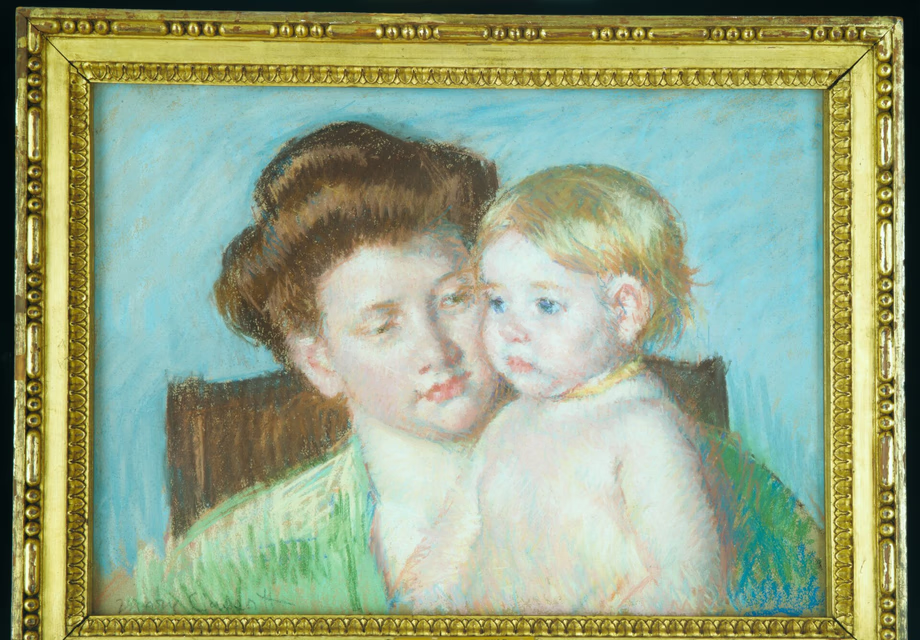
Look through any family's photographs and count how often the mother appears. The question Vogue posed, and the answer it arrived at, is uncomfortable: in most families the mother is the one holding the camera, and the result is a visual record in which she is systematically absent.
This is not a minor inconvenience of domestic life. It is an erasure produced by a habit, and it is one of the few kinds that can be reversed with an afternoon's work.
The Invisible Documentarian
The pattern is easy to verify and difficult to argue with. The parent who takes the photographs is the parent who is missing from them, and in most households that is the mother. Birthdays, first days of school, holidays and ordinary afternoons are recorded from behind the camera, which means the person who organised all of it appears only in the occasional photograph taken by somebody else.
The consequence accumulates quietly. A child growing up in a house with thousands of photographs may have very few of their mother, and the ones that exist are frequently taken reluctantly, badly lit, and with the photographer's arm extended at the wrong distance.
Professional portraits reverse the arrangement. They place the subject in front of the camera, on purpose, with the specific intention of making the image good, and that intention is most of the difference.
The Portrait as Self-Recognition
There is a second argument, and it is stronger than the documentation one.
A portrait session is a statement of a kind: I exist, I matter, and I am more than the role I have been performing. For mothers who have spent years seeing themselves only through the lens of responsibility, being photographed properly is a form of self-recognition, and the effects are practical as well as symbolic.
It is also worth stating what children actually want from these images. A child is not interested in whether their mother looked perfect. They are interested in what she looked like: the specific face, the specific expression, the sweater she always wore. A photograph taken when she was tired and forty-three is worth more to them in thirty years than a retouched image from her twenties.
How to Prepare for a Session
The practical work of a good portrait of someone who does not enjoy being photographed divides into a few decisions.
Choose the photographer carefully. The single most important factor is whether the photographer makes the subject comfortable. Look for work that shows personality rather than glamour, and ask how a session is directed.
Book it for a reason or for no reason. Sessions after a birth or a milestone are common; a session with no occasion at all is arguably more useful, because it captures an ordinary moment rather than a ceremonial one.
Decide what to wear in advance. Clothing that is comfortable and in colours that suit the skin tone, avoiding large logos and busy patterns. Bring two options and let the photographer choose in the light.
Have hair and makeup done if it helps, not if it becomes the subject. The objective is a recognisable version of the person, not a different one.
Ask for a mix of frames. Alone, with children, at a distance, close up, laughing, and not looking at the camera. A set with variation is what makes a session useful.
Bring something to do. Holding a child, a cup, a book or a dog gives hands something to do and gives a face something to feel.
Plan to print. A photograph that exists only as a file will be seen three times. A framed print on a wall will be seen every day for twenty years.
Directing Someone Who Does Not Want to Be Photographed
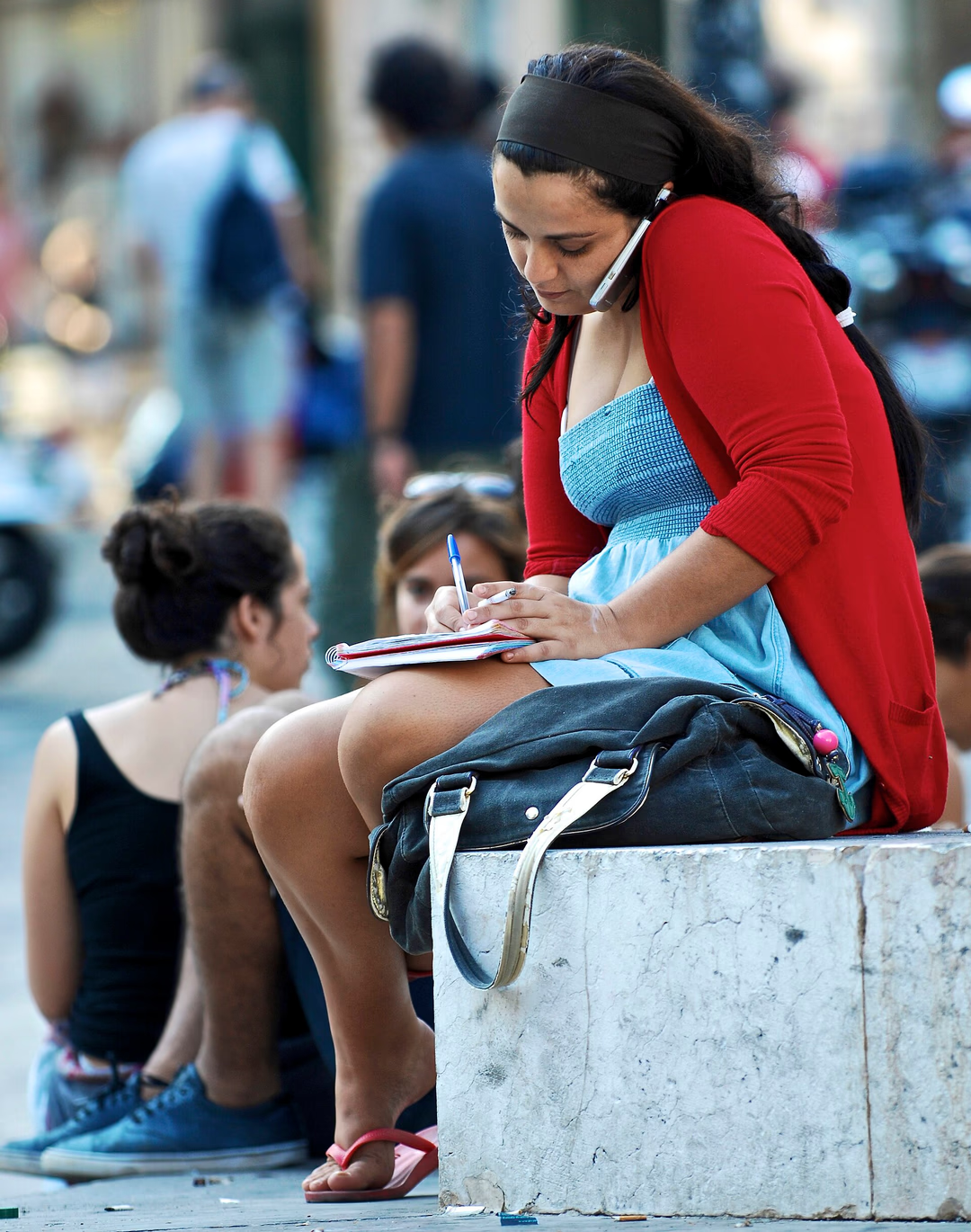
Reluctance is the normal case rather than the exception, and it has a standard solution.
Talk first. Five minutes of conversation before the camera comes out changes everything that follows. The stiffness in most reluctant portraits is caused by the photographer not having spoken to the subject.
Give a task rather than a pose. Walking, holding a child, making tea, looking out of a window. Activity produces natural expression, and instructions produce a frozen one.
Photograph in a place they know. A kitchen, a garden, a familiar street. Familiarity removes the sense of being on display.
Shoot continuously while they forget you. The best frame in a session of this kind is almost always the one taken while the subject was talking about something else.
Show them only the good ones. Reviewing on the back of the camera is a reassurance exercise, and the subject should see work they are pleased with, not the process.
Do not call it a photoshoot. Naming it something informal changes expectations, and the expectations are part of the problem.
Practical Tips
- Schedule professional portraits regularly, not only when a child is born.
- Hire a photographer who makes you comfortable and who directs without fuss.
- Include yourself in the visual record of your family. Put down the camera once a year and stand in front of it.
- Choose clothing in advance, in colours that suit you, and bring two options.
- Ask for a mix of frames: alone, with the children, close, distant, laughing, unposed.
- Print the results. Images that live on a phone are rarely seen again.
- Children treasure images of their mother as much as parents treasure images of their children.
- Book it with no occasion at all. The ordinary version of a person is the one that is usually missing.
Further Reading
Conclusion
The case for photographing mothers professionally is not really about photography. It is about the fact that the person who documents everyone else tends to disappear from the record, and that this happens by default unless somebody intervenes.
The intervention is small: book a session, get in front of the camera, and let someone else take the picture. The images produced will be looked at by the people who were there for the rest of their lives, and the version of the person they will want is the real one.
FAQ
Why are mothers often missing from family photographs?
Because they are usually the family's documentarians, the ones holding the camera. The result is a visual record in which the mother is systematically absent, not through choice but through the mechanics of who takes the pictures.
How often should I have professional portraits taken?
At minimum after major life transitions, and ideally annually or every couple of years. The point is a record of your own evolution as a person rather than only as a parent, and the ordinary years are as worth recording as the significant ones.
What if I hate having my photograph taken?
That is the normal starting position, and it is manageable. Choose a photographer who talks to you before raising the camera, work in a familiar place, do something with your hands, and photograph continuously while you are distracted by conversation.
What should I wear?
Comfortable clothing in colours that suit your skin tone, without large logos or busy patterns. Bring two options so the choice can be made in the actual light of the session rather than at home.
Should the children be in the pictures?
Some of them. A mix of frames alone and with the family is the most useful, and photographs of the mother on her own are the ones most often missing from an archive.
What do I do with the images afterwards?
Print them. A framed print is seen daily for decades, while a file on a drive is seen three times and forgotten. This is the step that determines whether the session changes anything.